How Dangerous Are Hypersonic Missiles: The World’s Fastest Weapons
Last Updated on March 11, 2026 by Engr. Shahzada Fahad
Table of Contents
Introduction:
In the long journey of human history, military technology has always been a constant, restless race between speed and power. In ancient times, the speed of warfare was determined by the swiftness of horses and the flight of arrows. As time moved on, cannons and traditional missiles took over the battlefield, and by the 20th century, the arrival of ballistic missiles completely shifted the global balance of power.
However, as we move deeper into the 21st century, a new technology has emerged that has captured the full attention of military experts and global leaders alike. This technology is known as hypersonic weapons. These advanced missile systems are capable of traveling at speeds that were once thought impossible, making them a massive challenge for even the most modern hypersonic missile defense networks.

Breaking the Sound Barrier: What is Missile Speed Over Mach 5?
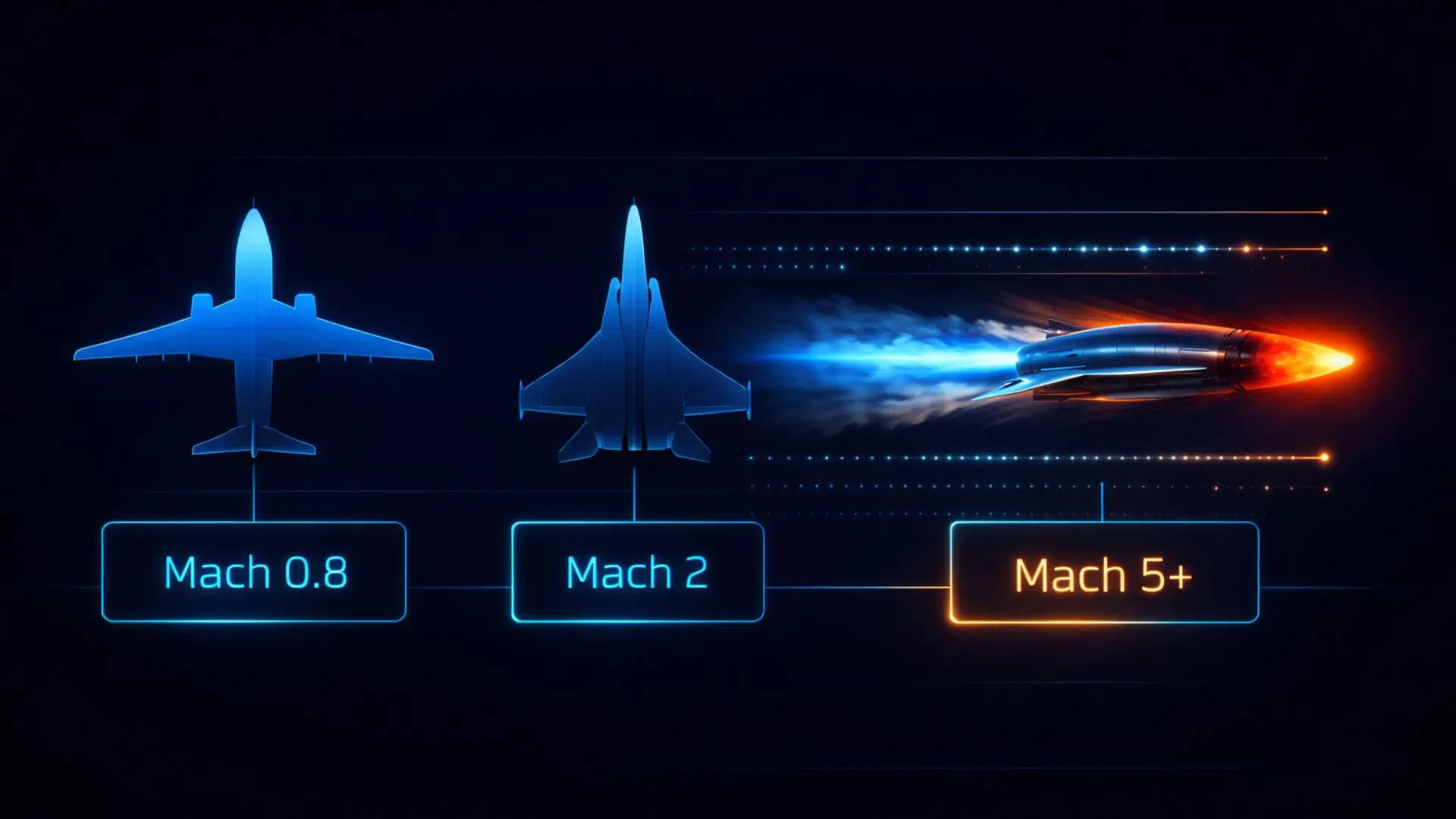
To truly understand hypersonic missile technology, we must first define what “hypersonic” actually means in a physical sense. In the atmosphere, speed is commonly measured using the Mach Number. Mach 1 is equal to the speed of sound, which is approximately 1,235 kilometers per hour at sea level. When any flight or weapon travels at a missile speed over Mach 5, it is officially classified as a hypersonic weapon.
This means that high-speed missiles in this category travel at a minimum of 6,000 kilometers per hour. To put that in perspective, some of the more advanced international missile development projects are targeting speeds of Mach 10 or even higher. At such an incredible velocity, a missile can cover thousands of kilometers in just a few minutes, turning the vast distances of our planet into short journeys and giving the target almost zero time to react.
The Strategic Shift: Why Next-Generation Missiles are Different
The fundamental difference between traditional missiles and these next-generation missiles is not just about raw speed; it is about the “mode of flight.” Most traditional ballistic missiles follow a fixed, predictable path. They are launched from the ground, travel high into space, and then follow a specific ballistic arc as they fall back toward Earth. Because this path can be calculated mathematically, current defense systems can predict where the missile will be and try to intercept it.
In contrast, hypersonic weapon systems fly at much lower altitudes and possess a terrifying ability: they can change their direction and “maneuver” while traveling at high speeds. This unpredictability is what makes them a major global missile threat. Because they do not follow a fixed arc, tracking them and stopping them with traditional hypersonic missile defense systems becomes nearly impossible.
Hypersonic Weapon Systems: Gliders vs. Scramjets

In the field of hypersonic warfare, there are two primary technologies that countries are developing to achieve these speeds:
- Hypersonic Glide Vehicles (HGV)
In an HGV system, a rocket carries the weapon to the upper layers of the atmosphere. Once it reaches the desired altitude, the vehicle detaches and re-enters the atmosphere, gliding toward its target at extreme speeds. Because these hypersonic glide vehicles can shift their path and “dodge” defenses during the glide phase, they are incredibly difficult to intercept.
- Hypersonic Cruise Missiles
These missiles stay within the atmosphere for their entire flight and use a specialized engine called a Scramjet (Supersonic Combustion Ramjet). This engine works by forcing air into the intake at high speeds, mixing it with fuel, and igniting it to create constant thrust. This technology gives the missile hypersonic strike capabilities that can be maintained throughout the flight, allowing it to hit distant targets with extreme precision.
The Physics of High Speed: Heat, Friction, and Engineering

Developing hypersonic tactical weapons is perhaps the most difficult engineering challenge of our time. The primary obstacle is not just the engine, but the intense heat. When an object moves through the air at Mach 5 or faster, the friction with the air molecules causes the surface of the missile to reach temperatures of thousands of degrees Celsius.
This intense heat is enough to melt most conventional metals. Therefore, hypersonic missile testing focuses heavily on discovering new, advanced heat-resistant materials and perfecting aerodynamics. Protecting the internal electronics and sensors from this heat is a complex problem that only a few nations have managed to solve. This is why military hypersonic programs are so expensive and time-consuming.
The Global Race: International Missile Development
Because of the power these weapons hold, the world’s major powers are locked in a fierce competition. We are seeing a massive surge in military hypersonic programs across the globe:
- Russia: Russia has already announced the ‘Avangard’ hypersonic glide vehicle, claiming it can travel at Mach 27 and is currently operational.
- China: China has showcased its DF-17, a system specifically designed to carry hypersonic glide vehicles to bypass regional defense shields.
- United States: The U.S. is investing billions into several programs, including hypersonic air-launched weapons and the Long-Range Hypersonic Weapon (LRHW), to ensure they remain competitive in hypersonic strike capabilities.
Other nations are also entering the arena, developing hypersonic surface-to-air missiles and other strategic missile technology to protect their borders and maintain a balance of power.
Strategic Deterrence and the Role of AI
Many experts believe that hypersonic weapons will fundamentally change “Strategic Deterrence.” If one country can launch a strike that reaches a command center thousands of miles away in under 10 minutes, the old rules of defense no longer apply. This has led to a new era of hypersonic warfare strategy.
To counter these threats, the future of defense is moving toward Artificial Intelligence (AI) and satellite networks. AI algorithms can process massive amounts of radar and satellite data to detect a hypersonic missile launch the moment it happens. Because humans cannot think fast enough to track a Mach 10 object, these AI systems will be responsible for making split-second defensive decisions. Furthermore, some experts suggest that the next step will be Directed Energy Weapons—lasers that fire at the speed of light—to stop these high-speed missiles.
Conclusion: The Challenges of a New Era
Ultimately, the development of hypersonic missile technology shows us just how fast the world of war technology is moving. The fusion of science, aerodynamics, and high-speed computing has created weapons that were considered science fiction just twenty years ago.
However, as we have learned from history, every new technology brings new challenges. The question is: Will the international community be able to create laws and control systems to manage this international missile development? Every time the balance of power shifts, it brings a new risk to global security. We must hope that as our weapons become faster, our wisdom in using them grows even faster.
Discover more from Electronic Clinic
Subscribe to get the latest posts sent to your email.


