Waveshare RP2350-Matrix: Dual ARM/RISC-V Cores, 8×8 RGB Matrix & 6-Axis IMU
A Deep Dive into the Dual-Architecture Powerhouse with a Dazzling Onboard LED Display.
Last Updated on August 26, 2025 by Engr. Shahzada Fahad
Table of Contents
Introduction:

The world of microcontrollers is constantly evolving, and leading manufacturer Waveshare has just raised the bar with its latest creation. Enter the Waveshare RP2350-Matrix, a feature-packed development board designed to offer unprecedented flexibility and power. Built around the new RP2350A microcontroller chip from Raspberry Pi, this board combines a unique dual-architecture core with a stunning onboard LED matrix, making it a top contender for hobbyists, developers, and educators alike.
In this deep dive, we’ll explore the specifications, key features, and the pros and cons of the Waveshare RP2350-Matrix to help you decide if it’s the right brain for your next creation.
What is the Waveshare RP2350-Matrix?
The Waveshare RP2350-Matrix is a compact and powerful development board that stands out for one primary reason: its core processor. The Raspberry Pi RP2350A chip offers a groundbreaking dual-core, dual-architecture design. This means developers can choose to run their projects on either two high-performance Arm Cortex-M33 cores or two open-source Hazard3 cores based on the flexible RISC-V architecture.
This choice, combined with Waveshare’s thoughtful integration of peripherals like a 6-axis IMU and an 8×8 RGB LED matrix, makes the RP2350-Matrix an incredibly versatile tool for everything from IoT devices and robotics to interactive art installations.
Waveshare RP2350-Matrix Pins Definition:
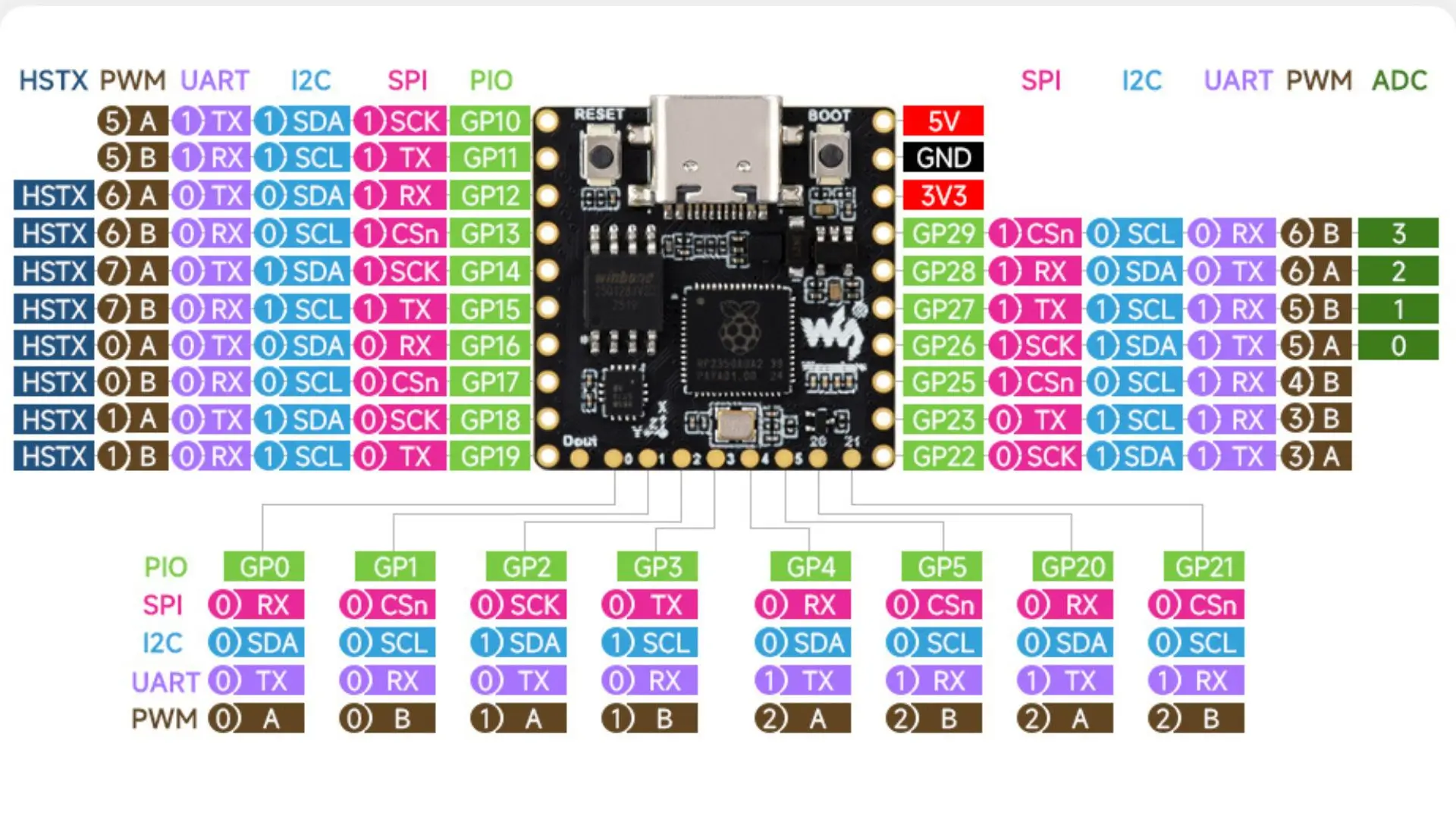
Waveshare RP2350-Matrix Specifications:
The “System on a Chip” (SoC) is the brain of the board, and the RP2350A is a revolutionary one.
- SoC: Raspberry Pi RP2350A
- Package: QFN-60
CPU: The Power of Choice
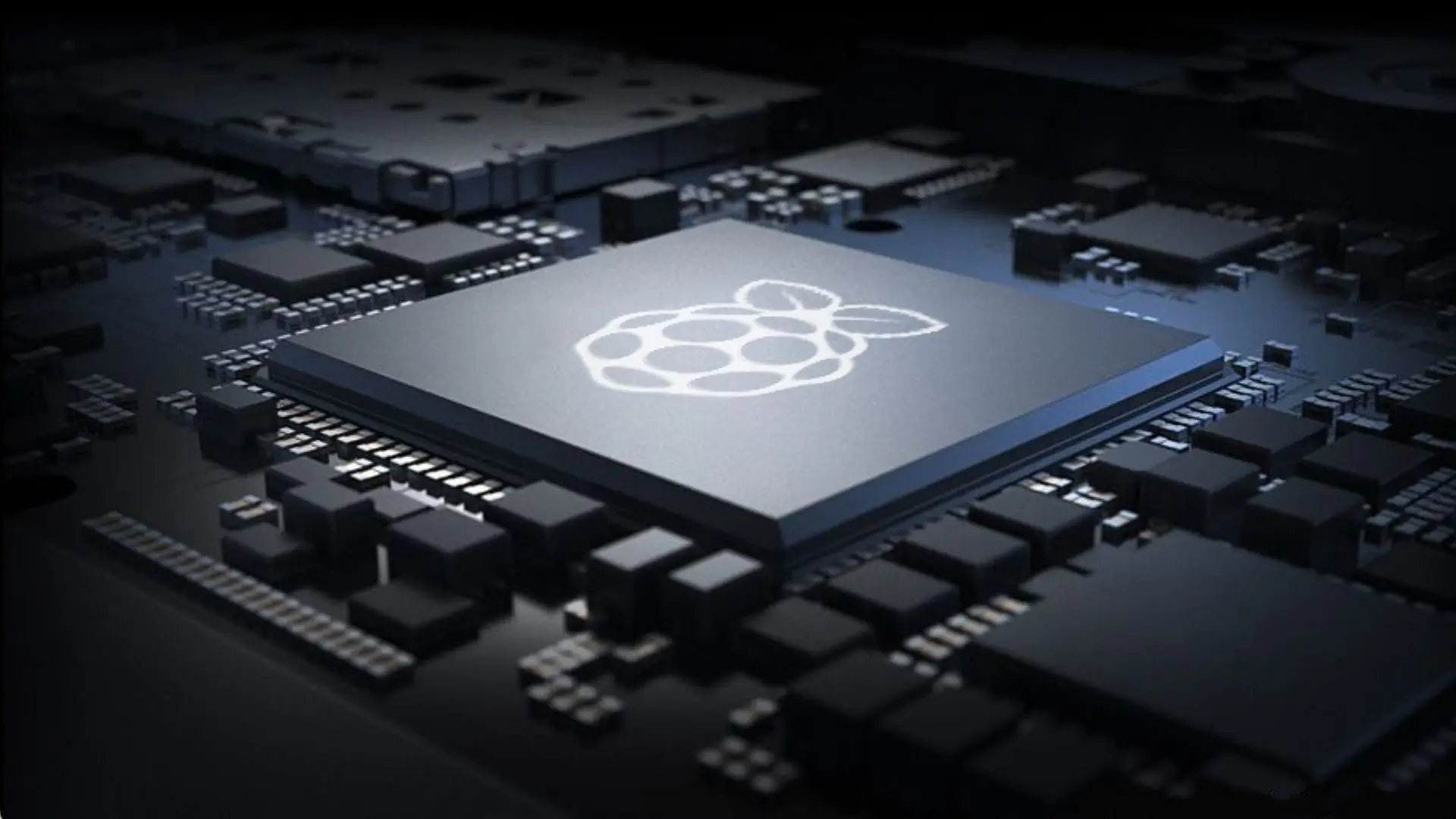
This is the single most important feature of the board. Unlike traditional microcontrollers, the RP2350A offers a choice between two powerful, dual-core processor architectures.
- Option 1: Dual-core Arm Cortex-M33 @ 150 MHz: This is a modern, high-performance, and secure ARM core. It includes features like Arm Trustzone and Secure boot, making it ideal for connected IoT devices that require a high level of security.
- Option 2: Dual-core RISC-V Hazard3 @ 150 MHz: This is an open-source architecture that offers incredible flexibility. Using the RISC-V cores allows developers to work within a rapidly growing open-hardware ecosystem.
Crucially, up to two cores can be used in any combination, providing unprecedented flexibility for complex projects that might need to balance secure tasks with general-purpose computing.
Memory and Storage
A powerful CPU needs adequate memory to perform. The RP2350-Matrix is well-equipped for demanding applications.
- Memory (SRAM): 520 KB on-chip: This is the volatile “working memory” used to run your code and store variables. 520 KB is a substantial amount, allowing for complex applications and larger data buffers.
- Storage (Flash): 16 MB: This non-volatile memory is where your program and files are stored permanently. At 16 MB, it’s a generous amount that can easily accommodate large MicroPython projects, libraries, and data logs.
Integrated Sensors and Display
This is where the board truly begins to shine, offering built-in components that would normally require external modules.
- Display: 8×8 RGB LED matrix: The most eye-catching feature, this 64-pixel RGB LED grid is perfect for visual feedback, simple animations, sensor data visualization, or status indicators without any extra wiring.
- Display Expansion: Dout pin: Waveshare has included a “Data Out” pin, which allows you to chain additional RGB LED matrices or NeoPixel strips to create larger, more impressive displays.
- Sensors: QMI8658 6-axis IMU: The onboard Inertial Measurement Unit (IMU) combines two sensors in one:
- 3-axis accelerometer: Measures linear acceleration, perfect for detecting motion, tilt, and orientation.
- 3-axis gyroscope: Measures angular velocity or rotation.
Together, these allow the board to understand its position and movement in 3D space, opening up possibilities for gesture controllers, robotics, and vibration analysis.
- On-chip temperature sensor: Useful for monitoring ambient temperature or the chip’s internal temperature during heavy loads.
Expansion and Connectivity

A development board is only as good as its ability to connect to other components. The RP2350-Matrix offers a rich set of I/O options.
- Form Factor: 2x 20-pin 2.54 mm headers and 8 additional solder pads.
- Total GPIOs: 25 multi-function General-Purpose Input/Output pins.
- Standard Protocols:
- 2x SPI (Serial Peripheral Interface)
- 2x I²C (Inter-Integrated Circuit)
- 2x UART (Universal Asynchronous Receiver-Transmitter)
- Analog Input: 4x 12-bit ADC (Analog-to-Digital Converter) channels for reading analog sensors.
- Output Control: 16x PWM (Pulse Width Modulation) channels for precise control of motors, LEDs, and servos.
- High-Speed Interface: 1x HSTX interface for high-speed serial data transmission.
- Programmable I/O (PIO): 3x PIO blocks with 12 state machines in total. This signature Raspberry Pi feature allows you to create custom hardware peripherals in software, enabling support for non-standard interfaces without taxing the main CPU.
Power, Form Factor, and User Interface
The physical design and power management are crucial for real-world projects.
- Dimensions: 25 x 25 mm: This postage-stamp-sized form factor makes the board incredibly easy to embed in small projects where space is a premium.
- Power Supply:
- 5V via USB-C or pin header: Flexible power options for development or deployment.
- ME6217C33M5G LDO: A capable Low-Dropout regulator that provides a stable 3.3V supply with up to 800 mA of output current, which is plenty for the board and many attached components.
- USB: A modern USB Type-C connector for power and USB 1.1 host/device programming.
- Controls: Onboard Reset and Boot buttons for easy programming and restarting without unplugging the device.
- Timing: Accurate on-chip hardware timers for precise event scheduling.
Programming and Development
Flexibility is at the heart of the RP2350-Matrix. Whether you’re a seasoned professional or just starting, the board has you covered.
- Languages: Full support for C/C++ for performance-critical applications and MicroPython for rapid prototyping.
- IDE: Compatibility with the popular Arduino IDE lowers the barrier to entry for millions of makers.
- Flashing: Simple drag-and-drop programming using mass storage over USB, just like other Raspberry Pi Pico boards.
Pros and Cons of the Waveshare RP2350-Matrix
No board is perfect for every situation. Here’s an honest look at the strengths and weaknesses.
Pros:
- Unmatched Architectural Flexibility: The ability to choose between ARM and RISC-V is a huge advantage for future-proofing projects and learning different ecosystems.
- Highly Integrated: With an IMU and an 8×8 RGB matrix onboard, you can start building complex projects with minimal external components.
- Reputable Manufacturer: Developed by Waveshare, a brand known for quality electronics and excellent product documentation (wikis).
- Strong Ecosystem Support: As a board using a Raspberry Pi chip and produced by Waveshare, it benefits from two strong communities, extensive documentation, and robust software libraries.
- Excellent for Visual Projects: The built-in, expandable LED matrix is perfect for data visualization, status indicators, or creative light displays.
Cons:
- Potential Complexity: The dual-architecture choice, while powerful, might be initially confusing for absolute beginners.
- USB 1.1 Speed: While sufficient for programming and standard communication, USB 1.1 is not ideal for high-bandwidth applications that require high-speed data transfer.
- Moderate Clock Speed: 150 MHz is very capable for most embedded tasks, but other microcontrollers on the market offer higher clock speeds for raw computational power.
Conclusion: Who Should Buy the Waveshare RP2350-Matrix?
The Waveshare RP2350-Matrix is an exceptional development board that pushes the boundaries of what a microcontroller can be. Its standout dual-architecture design, combined with Waveshare’s excellent hardware integration, provides a level of versatility that is rare in this market.
This board is perfect for:
- Developers and Tinkerers who want to experiment with both ARM and the burgeoning RISC-V ecosystem.
- Students and Educators looking for an all-in-one platform to teach programming, electronics, and sensor integration.
- Artists and Creators who need a simple way to build interactive, motion-sensitive light installations.
- IoT Enthusiasts building sensor nodes that can visualize data locally.
By packing a powerful, flexible core with a suite of useful onboard peripherals, the Waveshare RP2350-Matrix establishes itself as a must-have tool for anyone serious about modern embedded systems. It’s more than just a development board; it’s a platform for innovation.
Discover more from Electronic Clinic
Subscribe to get the latest posts sent to your email.