Complete Guide to 433MHz RF Receiver Module (YK04): Specs, Pinout & Uses
Last Updated on September 18, 2026 by Engr. Shahzada Fahad
Table of Contents
Description:
Discover everything about the 433MHz RF Receiver Module (YK04/PT2272). Learn its specifications, pinout details, key features, and practical applications in DIY smart home and automation projects.
Introduction:
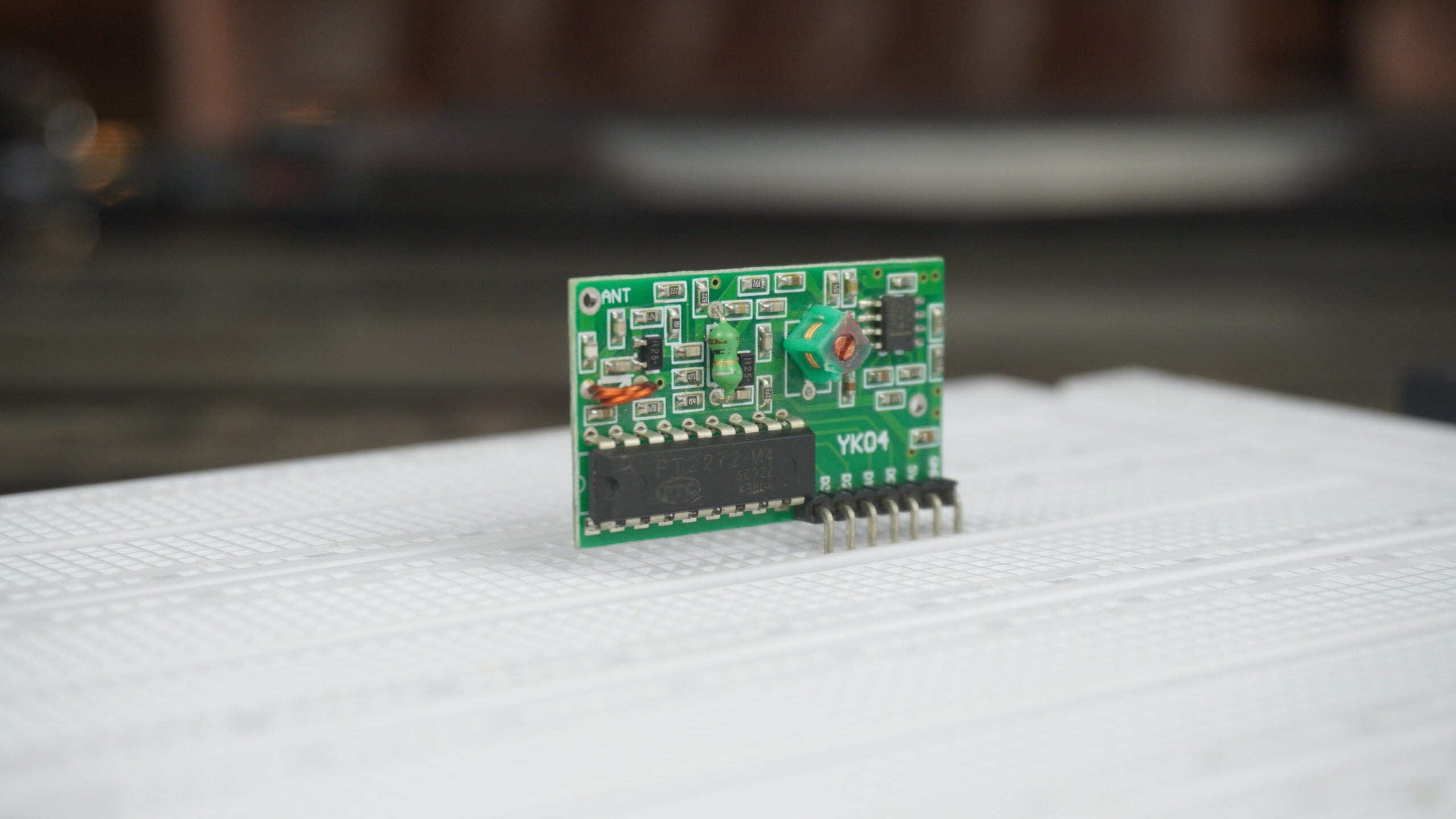
The 433MHz RF Receiver Module is a popular, low-cost wireless communication solution designed for short-range data transmission. Integrated with the PT2272 decoding IC and YK04 layout, this compact board allows microcontrollers like Arduino, Raspberry Pi, and NodeMCU to receive wireless signals from RF transmitters or remote controls effortlessly.
Technical specifications:
The 433MHz RF Receiver Module (YK04) operates on a standard DC 5V power supply and functions at a precise frequency of 433.92 MHz. It features an integrated PT2272 decoder IC, which automatically decodes incoming wireless signals and routes them across four distinct digital output pins (D0, D1, D2, and D3).
With a high receiver sensitivity of -105 dBm, the module can detect weak or distant signals reliably. Additionally, it includes a dedicated ANT soldering pad, allowing you to attach an external wire antenna to significantly boost its operational range and signal stability.
Pinout Details
Understanding the pin connections of the 433MHz RF Receiver module is straightforward and beginner-friendly. The VCC pin connects directly to a +5V DC power source, while the GND pin connects to the common ground of your circuit. The VT (Valid Transmission) pin acts as an indicator LED or status trigger, going HIGH whenever the receiver detects a valid signal from a matching transmitter. Finally, the D0 through D3 pins serve as digital data output channels. Each of these four pins corresponds to a specific button or signal channel on the transmitter, outputting a high signal to trigger relays, microcontrollers, or external components whenever that button is pressed.
Practical Applications & Uses
The versatility of this RF module makes it a popular choice across a wide range of DIY electronics and commercial applications. In smart home automation, it allows users to wirelessly control lights, fans, and home appliances using simple handheld RF remote controllers. It plays a critical role in security and alarm systems, where it intercepts signals from wireless door sensors, motion detectors, and panic buttons to trigger sirens or notifications. Enthusiasts frequently use it in remote-controlled robotics to manage motors and steer RC vehicles without needing complex Wi-Fi or Bluetooth setups. Additionally, the module is ideal for access control systems, such as automated gate openers and garage doors, as well as general DIY microcontroller projects integrated with platforms like Arduino, ESP8266, or PIC chips.
Amazon Links:
Other Tools and Components:
ESP32 WiFi + Bluetooth Module (Recommended)
Arduino Nano USB C type (Recommended)
*Please Note: These are affiliate links. I may make a commission if you buy the components through these links. I would appreciate your support in this way!
Support me on Patreon for more articles. I hope you like today’s episode. Like and share this article with your friends. See you in next episode and thanks for watching.
So, that’s all for now.
Support me on Patreon:
If you enjoy my work and find these projects helpful, please consider supporting me on Patreon. With just $1, you can get access to all project source codes, schematics, and extra resources that I share with my supporters. Your support helps me continue creating new electronics tutorials, experiments, and open projects for the community. Thank you so much for being part of this journey and for supporting my work!
Discover more from Electronic Clinic
Subscribe to get the latest posts sent to your email.