Digital Electronics
Welcome to our section for Digital Electronics Projects! This is where you will learn about the building blocks of all modern technology, like computers, smartphones, and smart devices. If you have ever wondered how a computer “thinks,” the answer starts right here. This category is perfect for students and hobbyists who want to understand the world of ones and zeros. We make learning these important ideas simple and clear for everyone.
In digital electronics, everything is based on simple “on” or “off” signals, which we call ones and zeros. The most basic parts are called Logic Gates. These are like tiny electronic brains that make simple decisions. In our guides, you will learn all about the different types, like AND, OR, and NOT gates. We explain how they work using easy-to-understand pictures and “truth tables,” which are simple charts that show you what each gate will do. We promise to make it easy to understand from the very start.
Once you understand logic gates, you can start building more exciting things! We have many Digital Electronics Projects that show you how to combine these gates to create useful circuits. You will learn about decoders, which help a computer choose one instruction out of many. You will also learn about encoders, which do the opposite. We have simple guides on how to build circuits that can do math, like half adders and full adders. These are the circuits that allow computers to calculate things.
Everything you learn here is a key part of how all digital technology works. Our guides break down every topic into small, easy steps. Scroll down to explore our Digital Electronics Projects, pick a topic that sounds interesting, and start discovering the amazing world of digital logic today
-
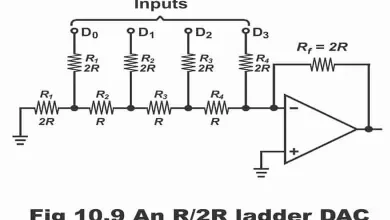
Digital to Analogue D/A converter in Digital Electronics
Digital to Analogue (D/A) Conversion The process of converting numerous digital input signals to equivalent analogue output signals or voltage…
-
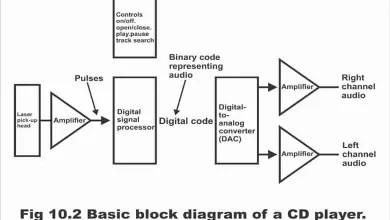
Digital to Analogue & Analogue to Digital Converters
Digital to Analogue & Analogue to Digital Converters The distinctive interface encoders and decoders which are used between analogue and…
-
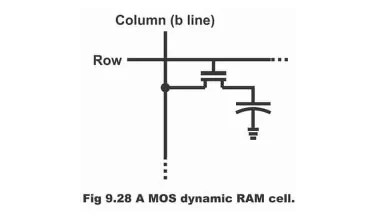
Types of Random Access Memory or RAM in Digital Electronics
Random Access Memory or RAM A type of semi-conductor memory, in which stored data can be read when required and…
-
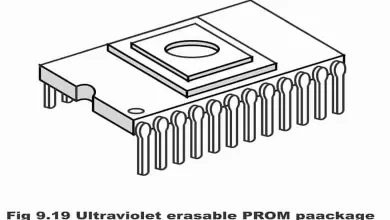
Erasable Programmable Read Only Memory (EPROM) in Digital Electronics
Erasable Programmable Read Only Memory (EPROM) An amended form of a PROM wherein a customer or user can repeatedly erase…
-
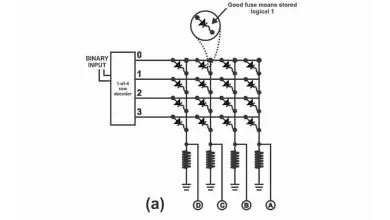
Programmable Read Only Memory or PROM in Digital Electronics
Programmable Read Only Memory or PROM Programmable read only memory (which is shortly known as PROM) is a type of…
-
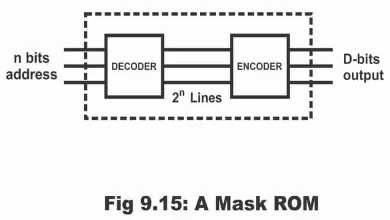
Read Only Memory (ROM) in Digital Electronics
Read Only Memory (ROM) Read only memory (which is also shortly known as ROM) is a kind of memory where…
-
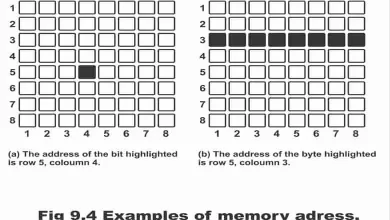
Memory Addressing: Writing And Reading Operation in Digital Electronics
Memory Addressing Addressing means storing of binary data on a specific address or location in a memory whereas address refers…
-
Types of Memories: Magnetic and Solid state Memory in Digital Electronics
Introduction Types of Memories: Magnetic and Solid state in Digital Electronics- Memory literally means to memorize (or to preserve something…
-
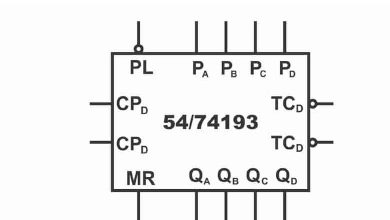
Presettable Counters with Circuit Diagram in Digital Electronics
Presettable Counters A presettable counter is such a counter which counts up or down from a presettable value. In other…
-
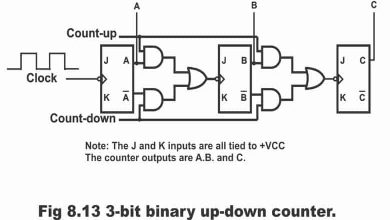
Down Counters and Up-Down Counters in Digital Electronics
Down Counters Until now, we have studied about counters which conduct counting in an upward direction (i.e. 0, 1, 2,…